


Clockmaker: Jewel Match 3 Game
4.844.57K Reviews
App Specs
- Version
- 105.2.0
- Updated On
- License
- Free
- Downloads
- 10,000,000+
- Developer
- BELKA GAMES
- Categories
- Puzzle
- Platform
- Android
Screenshots






 Analysis by AppCompare
I judge a match-three game by more than whether its boards are satisfying to clear. I also want to know if the puzzles give me a reason to return, whether the story adds anything beyond decoration, and how much patience the game expects when a level gets stubborn. Clockmaker: Jewel Match 3 Game is a free puzzle game from BELKA GAMES that wraps jewel matching in a mystery about a cursed town. Its unusual atmosphere is the main reason I would try it; the familiar tile-swapping is the part that will feel comfortable to most players.
That makes it easiest to recommend to someone who enjoys a steady stream of compact puzzles with a story thread to follow. It is less suited to a player looking for a pure logic challenge, an entirely self-contained game, or a match-three experience with no pressure to keep progressing. The game is rated for Everyone, and its average rating is 4.8 from around 536,000 ratings, which suggests it has found a large audience, though a high rating cannot tell you whether its particular pace will suit you.
What to decide before you start
The first question is whether you like the basic rhythm of match-three play: scan the board, swap neighboring jewels, and build matches while working around obstacles. Clockmaker keeps that familiar foundation, then uses the cursed-town setting to give progression a sense of purpose. If you already enjoy clearing boards in short sessions, its story can be a welcome nudge to play another level. If you tire quickly of repeating a core puzzle format, the narrative may not be enough to change your mind.
The game has been available since January 10, 2015, and its current version is 100.1.1. It requires Android 6.0 or later, so it is worth checking your device’s system version before you plan to install it. The game has more than 10 million installs, but that reach is best treated as a sign of broad appeal rather than proof that every level or feature will work for every player.
The Enchanting World of Clockmaker
From the moment you launch Clockmaker: Jewel Match 3 Game, you're transported into a mystical world filled with intrigue and adventure. The storyline is centered around a cursed town, and it's your job to solve the mystery by completing various match-three puzzles. The graphics are stunning, with vibrant colors and intricate details that bring the magical town to life.
Gameplay Mechanics That Keep You Engaged
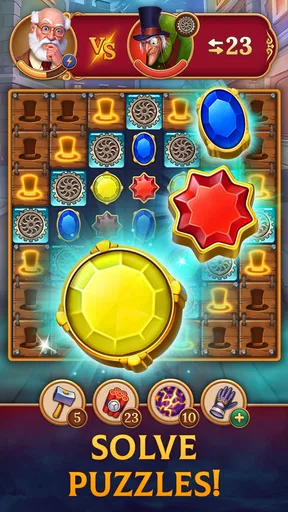
At its core, the game follows the classic match-three format where you swap adjacent jewels to form a line of three or more of the same kind. But don't be fooled by its simplicity. Clockmaker introduces a variety of elements that keep the gameplay fresh and exciting. From frozen jewels to locked tiles, each level presents a unique challenge that requires strategic thinking.
The game also includes power-ups and boosters that add an extra layer of strategy. Whether it's a bomb to clear a section of the board or a lightning bolt to blast through obstacles, these tools can be game-changers when you're stuck on a particularly tricky level.
Worth Reading Before You Choose

EA SPORTS FC Mobile 26 Is a Bigger Football Game, but It Takes Time

Flipboard Shows What News Apps Must Do Beyond the Feed

Switching to Android Auto Means Rethinking Your Driving Routine

Google Calendar Makes a Crowded Week Easier to Manage

Ludo King Makes the Most of the Minutes Between Plans

Baby Panda World Brings Quick Play to Modern Phones, but Its Game Library Feels Busy
Reading the board instead of rushing a move
My practical tip is to pause before making the first match. Look for the level’s obstacle and ask which area needs attention; a match that clears jewels but leaves the blocker untouched may feel productive while doing little to reach the objective. When the board is constrained by frozen or locked tiles, prioritize moves that open space or create access to the blocked area, rather than taking the first obvious line. This habit matters more than trying to trigger a booster as soon as it appears.
I also treat boosters as a resource for a specific problem, not as a routine part of every board. If I am close to finishing an objective, using one to remove a bottleneck can make sense. If I have not yet understood how the level is arranged, spending it immediately can simply postpone the same difficulty. That distinction helps keep the free-to-play loop more deliberate: first learn what the board is asking for, then decide whether a tool is worth using.
A Story That Draws You In
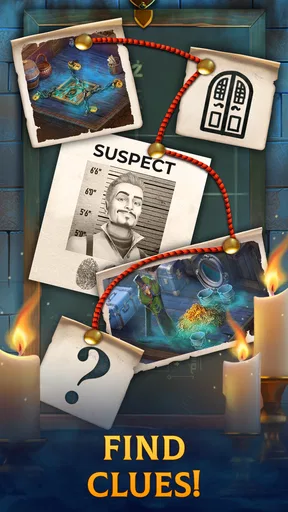
What sets Clockmaker apart from other puzzle games is its captivating narrative. As you progress through the levels, you unravel the story of the cursed town, meeting intriguing characters along the way. Each character has their own backstory and role in the mystery, making you feel more invested in the outcome.
The dialogue is well-written, and the voice acting adds a nice touch, making the characters feel real and relatable. It's like being part of an interactive novel where your puzzle-solving skills dictate the storyline's progression.
When the narrative is a plus—and when it is not
The story works best for me as a reason to keep moving through the puzzle sequence, not as a substitute for enjoying the boards themselves. If I have a few quiet minutes, following a character thread can make a single level feel like part of a larger outing instead of an isolated score chase. Someone who usually skips dialogue can still focus on the matching, but should not choose this primarily for a deep, branching narrative; the core activity remains solving boards to advance.
That also makes it different from a stripped-back match-three game built around quick rounds alone. Clockmaker gives its puzzles a moody setting and a continuing mystery, while a minimalist alternative may be a better fit if you want to open a game, clear a board, and leave without tracking a plot. Neither approach is automatically better. The useful choice is whether a story gives you momentum or feels like a pause between the parts you actually came to play.
Visuals and Sound That Enhance the Experience
The visual design of Clockmaker is nothing short of spectacular. The developers have done an excellent job of creating a whimsical yet slightly eerie atmosphere that perfectly complements the game's theme. The attention to detail is evident in everything from the intricate jewel designs to the beautifully animated backgrounds.
The sound effects and music further enhance the gaming experience. The soundtrack is a blend of mystical tunes and suspenseful melodies that keep you immersed in the game. Sound effects, like the satisfying "ping" of matching jewels, add to the overall enjoyment.
Choosing the right moment to play
A realistic use case is a short break at home or while waiting for an appointment: I can focus on one board, see whether I have made progress, and stop before turning the game into an all-evening commitment. The story gives me a thread to pick up next time, while the board itself supplies a clear immediate goal. I would be more cautious about starting a level when I have only a few seconds, especially if I tend to dislike stopping midway through a puzzle.
For a more relaxed session, I would play with sound on because the music and matching effects contribute to the atmosphere. In a shared or quiet space, the visual cues still carry the puzzle, so muting the game is a sensible option. The key trade-off is that the eerie presentation makes Clockmaker more distinctive than a plain jewel grid, but players who prefer a calm, neutral look may find that tone less appealing.
Daily Challenges and Events
To keep things interesting, Clockmaker offers daily challenges and seasonal events that provide new puzzles and rewards. These events are a great way to earn extra boosters and keep the game engaging even after you've completed the main story. Plus, the competitive aspect of leaderboards adds an element of friendly rivalry among players.
How to use the extra activities without turning them into chores
I would treat the daily activities as optional variety rather than a checklist that must be cleared. They can be useful when I want a change from the main run or a reason to return for a brief session, but they are not essential if I only care about progressing through the central puzzle-and-story loop. Leaderboards are similarly best enjoyed as a light comparison; if rankings make a relaxing game feel like a deadline, ignoring them is likely to make the experience better.
Compared with puzzle games that offer only a repeating stream of boards, event-based activities can give a returning player a different immediate target. The trade-off is that an activity schedule can make play feel more directed than purely casual puzzling. I would not install Clockmaker solely for events or competition; its lasting appeal depends more on whether I like its regular boards and atmosphere.
Accessibility and User Experience
One thing I appreciated about Clockmaker is its accessibility. The game is easy to pick up for newcomers, yet challenging enough to keep seasoned players entertained. The user interface is intuitive, with clear instructions and helpful hints available if you find yourself stuck.
The game is free to download, with optional in-app purchases for those who want to progress faster or acquire special items. However, the game is generous with its rewards, allowing players to enjoy it without feeling pressured to spend money.
What “free” means for a cautious player
There is no purchase price to start, but optional in-app purchases range from $0.29 to $199.99 per item. That is a broad span, so I would not treat every purchase as a small add-on or assume that spending is necessary. If I were setting the game up for a younger player, I would check the device’s purchase controls first and make clear that paid items are optional. The Everyone rating describes the content age category; it does not remove the need for ordinary care around purchases.
If a level becomes frustrating, I would first retry with a different plan, use the available hint, or take a break instead of buying something in the heat of the moment. That is a useful boundary for any free puzzle game with optional purchases. Clockmaker makes sense for a no-cost trial of its style, but someone who wants a one-time payment with no optional spending should look for a game built around that model instead.
Who should choose another kind of puzzle
Clockmaker is a strong candidate if you enjoy colorful jewel matching, like having a mystery to follow, and are comfortable with a familiar puzzle format gaining variety through obstacles and boosters. I would also recommend it to players who want an approachable game they can return to in short sessions, as long as they do not expect every session to feel like a brand-new genre of challenge.
I would steer away from it if your priority is logic puzzles with one carefully constructed solution, a word game, or a completely offline-feeling experience without ongoing activities and optional purchases. A plain match-three alternative may suit you better if you care only about quick board-clearing. Conversely, a story-first adventure may be a better choice if you want narrative decisions to matter more than matching. Clockmaker sits between those expectations, and that middle ground is its defining trade-off.
My recommendation
Overall, I see Clockmaker as an inviting choice for puzzle fans who want atmosphere and a continuing story alongside familiar matching. Its cursed-town setting gives the progression a personality, and obstacles encourage me to think about where each move will help rather than matching at random. It is not the right pick for everyone: the core mechanic remains match-three, the optional activities may not appeal to players who avoid scheduled goals, and the purchase range deserves a little attention.
Still, because it is free to begin, I think it is worth trying if you enjoy this kind of board puzzle and want more than a bare sequence of levels. The game is developed by BELKA GAMES, is rated for Everyone, and has reached more than 10 million installs. Those details help identify the product, but my recommendation comes down to fit: choose it for jewel puzzles wrapped in a distinctive mystery, and skip it if you want either a pure logic challenge or a story that takes center stage over the boards.
Pros
- Engaging storyline with unique puzzles.
- Regular updates with new levels added.
- Stunning graphics and smooth animations.
- In-game events offer exciting rewards.
- No mandatory ads disrupting gameplay.
Cons
- Some levels can be very challenging.
- Energy system can limit playtime.
- In-app purchases can be expensive.
- Requires a stable internet connection.
- Progress can be slow without purchases.
FAQs for Clockmaker: Jewel Match 3 Game
What is the main objective of Clockmaker: Jewel Match 3 Game?
Clockmaker: Jewel Match 3 Game is a puzzle game where players solve match-3 puzzles to progress through levels. The main objective is to match three or more jewels of the same color to clear them from the board, completing specific goals for each level. Players also unravel a captivating storyline involving a mysterious clockmaker.
Are there in-app purchases in Clockmaker: Jewel Match 3 Game?
Yes, Clockmaker offers in-app purchases. Players can buy power-ups, extra lives, and other items to enhance their gameplay experience. While the game is free to download, these purchases can help players progress through challenging levels more easily, though they are not necessary to enjoy the game.
Can Clockmaker: Jewel Match 3 Game be played offline?
Clockmaker: Jewel Match 3 Game requires an internet connection to download updates and access certain features. However, once the game is installed and certain data is cached, players can enjoy the game in offline mode. Keep in mind that some functionalities might be limited without an active connection.
How does the storyline enhance the gameplay experience in Clockmaker?
The storyline in Clockmaker adds depth to the gameplay by providing a mysterious narrative for players to uncover as they progress. Set in a captivating world, players interact with intriguing characters and solve puzzles to reveal secrets, making the game more engaging and immersive beyond the standard match-3 mechanics.
What are some strategies for progressing in Clockmaker: Jewel Match 3 Game?
To progress efficiently in Clockmaker, focus on creating special jewels by matching more than three in a row. These special jewels can clear larger sections of the board. Plan your moves strategically, aiming to complete level objectives with fewer moves. Utilizing power-ups wisely can also help tackle more challenging puzzles.


